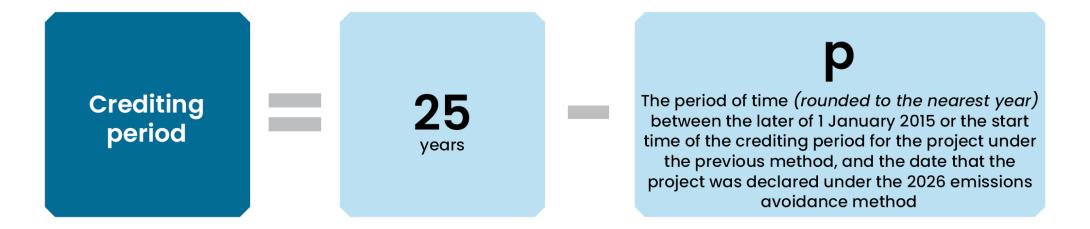
Australian Carbon Credit Unit (ACCU) Scheme projects registered under the savanna fire management methods may apply to transfer to the Savanna Fire Management—Emissions Avoidance 2026 (2026 emissions avoidance method) or the Savanna Fire Management—Sequestration and Emissions Avoidance 2026 method (2026 sequestration method).
Projects may apply to transfer to the same method type. This includes:
- emissions avoidance projects under closed methods (2013, 2015 or 2018 methods) transferring to the 2026 emissions avoidance method
- sequestration projects under the 2018 method transferring to the 2026 sequestration method.
Projects may also apply to transfer to a different method type. This includes:
- emissions avoidance projects transferring to the 2026 sequestration method
- sequestration projects transferring to the 2026 emissions avoidance method.
Key considerations for transferring projects
Consider our average and legislative processing times for applications. Transferring projects can be a multi-step process, so it’s important to plan and get your timing right. For projects transferring from an emissions avoidance method to the 2026 sequestration method, the process must be complete by 1 December.
If you choose to transfer your existing savanna fire management project to either of the 2026 savanna fire management methods, you should consider the following:
- Baseline periods for transferring project areas remain the same.
- Transfers to the same method type will apply from the start of the current reporting period.
- Transfers to a different method type will apply from the start date of the new project.
- Projects can’t transfer to or between closed methods.
- Existing vegetation fuel type maps created and validated under closed methods can be used under the 2026 savanna fire management methods under the following conditions:
- If a map required revision under the previous method, proponents must notify us and revise it according to the previous method (including revalidation if necessary).
- If proponents elect to update a vegetation fuel type map, the map must be validated in accordance with the department's technical guidance document for the 2026 savanna fire management methods.
- If the project area contains weed-affected areas, these areas must be treated using either herbicide or mechanical removal (fire is not allowed). This must be done within one year before applying to transfer to the 2026 savanna fire management methods. The weeds must then be treated annually until eradicated. If these conditions can’t be met, proponents must remove weed-affected areas.
Crediting period for transferring projects with new eligible interest-holder consents
Transferring projects to either of the 2026 methods will have a longer crediting period if the application includes evidence of new eligible interest-holder consents.
For most projects that transfer with consents, the crediting period will end in 2051. However, if you apply to transfer your project with new eligible interest-holder consents and we approve the application or declare the new project between 11 October and 31 December of any year, your crediting period will end in 2050 instead of 2051. To get the full crediting period extension and claim abatement for the 2050 year, you should apply to transfer your project earlier in the year to allow time for the application to be approved before 11 October.
How to transfer
Use our questionnaire below to help you understand how to transfer your savanna fire management project.
To same method type
Apply to vary the project method through Online Services.
Crediting periods
Transferring with evidence of new eligible interest-holder consents
The crediting period for projects that transfer to the same method type will begin from the project start date. Applying to vary the project method to the same method type will not change the project start date.
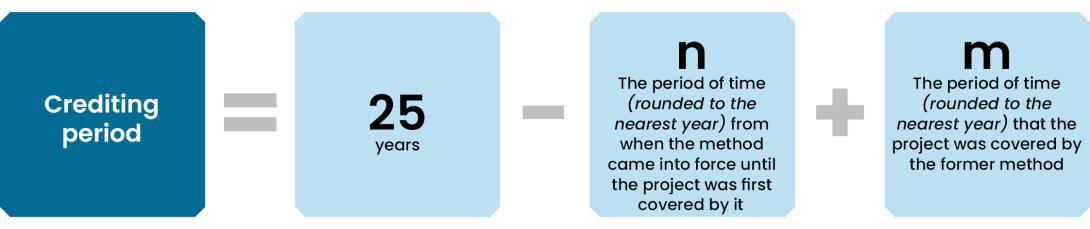
Transferring without evidence of new eligible interest-holder consents
Projects that transfer to the same method type without evidence of new eligible interest-holder consents will have a crediting period of 25 years from their original crediting period start date.
From emissions avoidance to sequestration method
This is a multi-step process and differs depending on whether you’re transferring an entire project or part of a project.
Before you transfer, you’ll need to:
- obtain new consents from all eligible interest-holders
- ensure you can maintain legal right for the duration of the project
- finalise a permanence plan. You can choose a 25-year or 100-year permanence obligation.
Ensure there is enough time to complete the following steps by 1 December of the year directly following the most recent calendar year reported on.
Submit an offsets report with a reporting period that covers the most recent full calendar year.
We can assess the crediting application simultaneously with other applications, but the project can’t be declared under the 2026 sequestration method until any certificates of entitlement and ACCUs from the offsets report have been issued.
- Complete the following steps simultaneously using the Register a project form in Online Services.
- Apply to revoke the project.
- Apply to register a new project under the 2026 sequestration method. The project areas from the revoked project must be identical to those included in the new project.
- Provide evidence in the application that all persons who hold an eligible interest in the project area have consented to you submitting the registration application. Notify us of the linked applications.
First make sure the project is divided into project areas that will be transferred to the 2026 sequestration method, and project areas that will remain under an emissions avoidance method.
If the project isn’t already divided into these project areas, you will need to subdivide the existing project areas. You can subdivide your project area using the vary the project area form in Online Services. If approved, this variation will take effect from the start of the current reporting period.
The 2013 or 2015 savanna fire management methods don’t allow for subdivision of project areas. If you are registered under one of these methods, you will need to transfer the entire project to the 2026 emissions avoidance method before you apply to subdivide the project areas.
Then, the following steps must be completed by 1 December of the year directly following the most recent calendar year reported on:
- Submit an offsets report with a reporting period that covers the most recent full calendar year. If ACCUs are requested, we must issue the certificate of entitlement and ACCUs for that reporting period before we decide on the transfer.
- Apply to vary the project area, requesting removal of the transferring project areas, through Online Services.
- Apply to register a new project under the 2026 sequestration method. The removed project areas from the original project must be identical to those included in the new project.
- Provide evidence in the application that all persons who hold an eligible interest in the project area have consented to you submitting the registration application. Notify us of the linked applications.
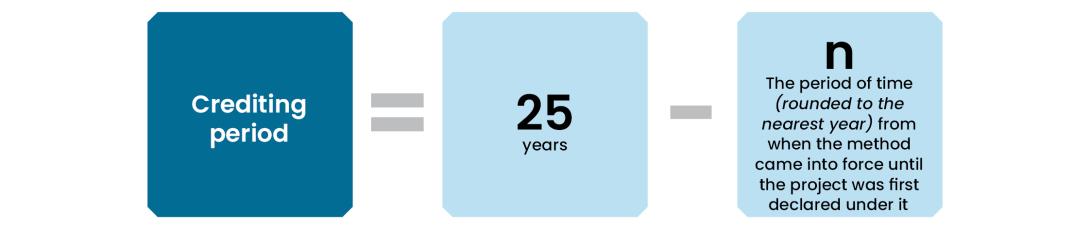
From sequestration to emissions avoidance method
To transfer an entire sequestration project to the 2026 emissions avoidance method, you’ll need to:
- relinquish all ACCUs issued to the project
- apply to revoke the project through Online Services
- apply to register a new project under the 2026 emissions avoidance method.
The final calendar year under the sequestration method must be consecutive with the first calendar year reported on under the 2026 emissions avoidance method. This means the applications to revoke and register must be completed within the same calendar year.
To transfer part of a project from a sequestration method to the 2026 emissions avoidance method, please contact soilsavannaagriculture@cer.gov.au or 1300 553 542.
Transferring with evidence of new eligible interest holder consents
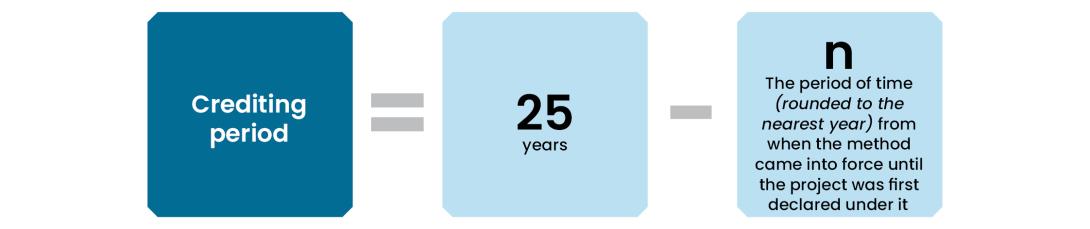
Transferring without evidence of new eligible interest holder consents
If you are unable to provide consents when you transfer, your project may be registered with the condition that consents are provided before the end of the first reporting period. The crediting period may be shorter than if consents were provided with the application to transfer.